Michigan State Housing Development Authority
“I look forward to hearing more about your project.”
Detroit-based hybrid owner-developer
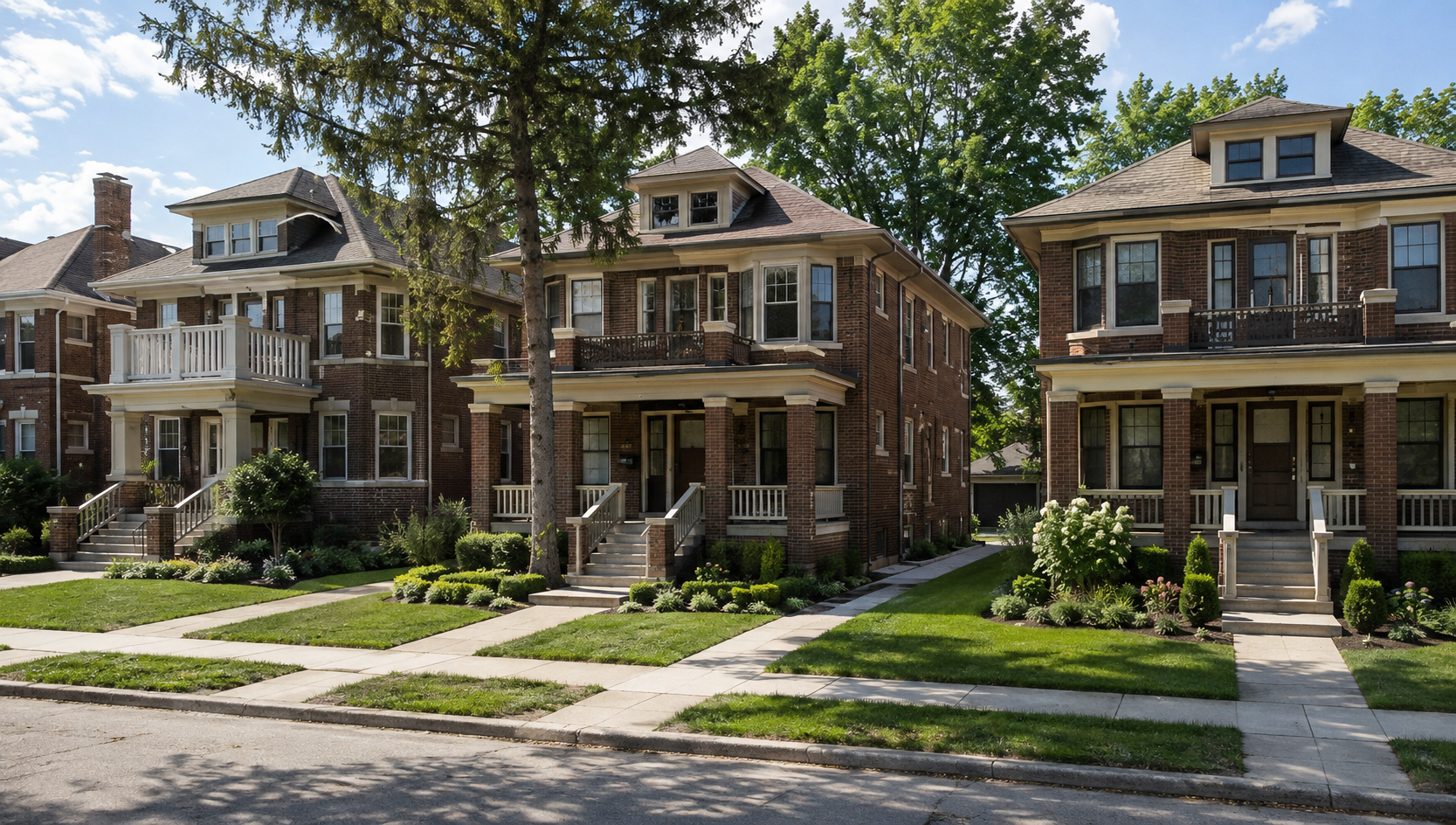
Iron Oak is building a repeatable affordable and workforce housing platform, starting with a proposed family-oriented duplex portfolio in Dexter–Linwood.

Our thesis
Neighborhood-scale development
Iron Oak exists to close the distance between neighborhood need and investable execution.
We combine local ownership, historically compatible design, family-oriented housing, disciplined phasing, and long-term stewardship. Growth is earned project by project—not announced ahead of performance.
Proposed first phase
Active predevelopment · Dexter–Linwood
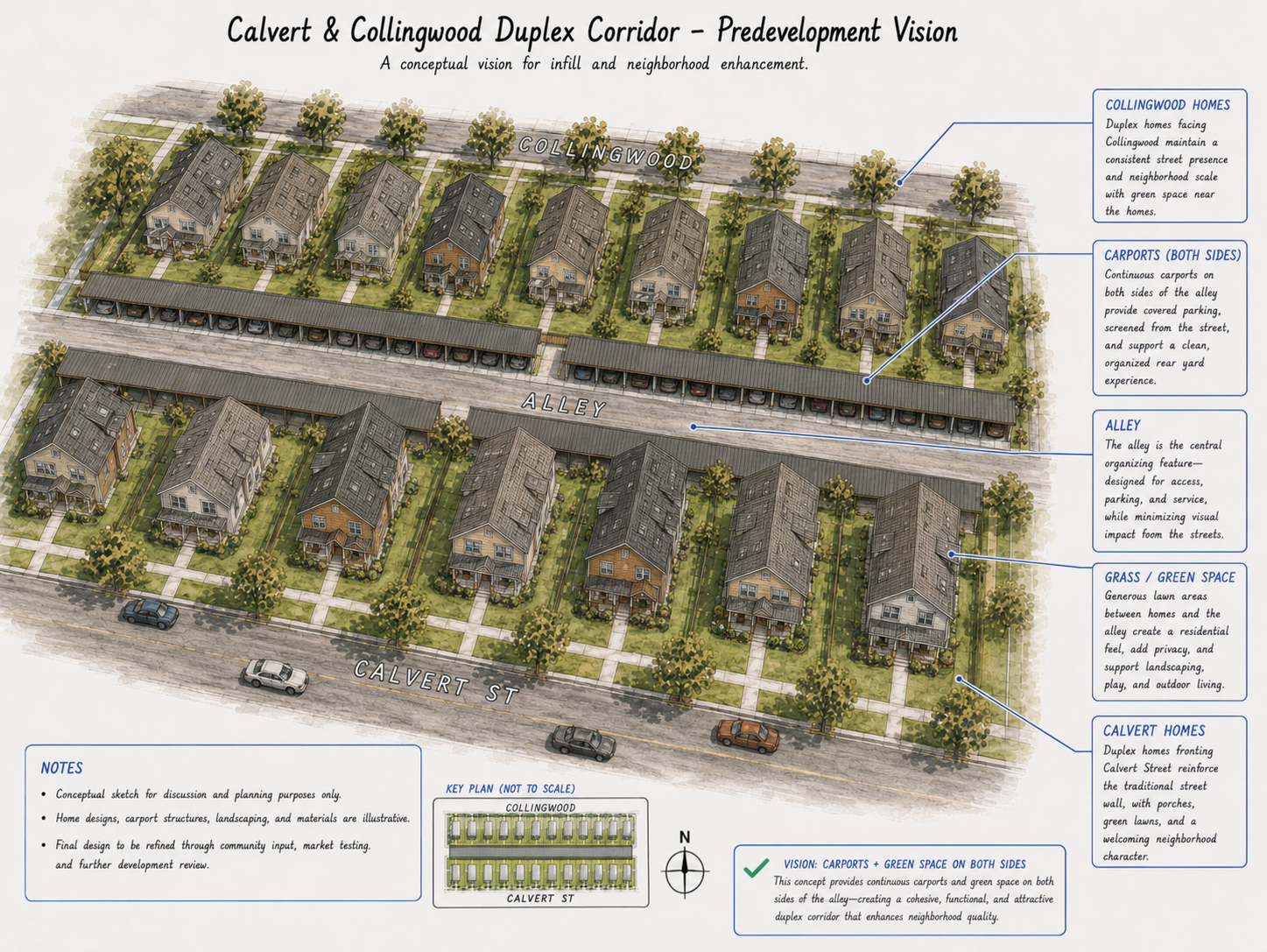
Iron Oak is developing a proposed first phase of three duplex buildings and six family-oriented rental homes on Calvert. The concept combines two new duplexes with the rehabilitation of one existing duplex.
Proposed scope is subject to final design, zoning, underwriting, environmental review, and program approvals. Exact property numbers are intentionally omitted from this public site.
Future pipeline · illustrative
After Phase One performs, Iron Oak can pursue additional Calvert and Collingwood clusters. The concept organizes homes, green space, alley access, and covered parking into a cohesive neighborhood pattern.
Future figures are planning concepts—not committed construction, controlled sites, or approved unit counts.
Phase One remains in predevelopment. These milestones distinguish the documented concept from the work required before construction.
The proposed six-home program and design direction are outlined in project materials.
Confirm current control and title for every proposed parcel, then resolve site conditions, zoning and environmental requirements.
Complete professional scope review, validate the budget and secure written financing and approval commitments.
Set the construction and leasing schedule after the required conditions are met. No opening date is announced.
Market context
The Detroit housing case
Iron Oak's strategy sits where population momentum, historic housing stock, affordability pressure, and neighborhood-scale infill meet.
Public data shown for market context. Sources reflect the dates stated and do not represent Iron Oak performance projections.


Detroit's next chapter
Detroit's momentum is real. Iron Oak's role is specific: turn controlled and attainable neighborhood sites into stable, family-oriented homes without losing the architecture or local identity that makes the block worth investing in.
Watch the City of Detroit film ↗Video: “Stay. Return. Move.” · City of Detroit · April 2026Early engagement
Organizations opening the conversation
Iron Oak has begun assembling the public, technical, and financing relationships required to move from a neighborhood concept to a fundable first phase.
“I look forward to hearing more about your project.”
Welcomed a call to learn about the initiative and offer insight into ways MSHDA may assist.
Helped connect Iron Oak to housing technical-assistance resources.
Invited a policy-team briefing to learn more and discuss follow-up questions.
Advanced a working conversation around Iron Oak’s draft pro forma and project readiness.
The district office has been engaged on site-safety coordination affecting the Phase One block.
These references describe correspondence, meeting interest, introductions, or technical-assistance conversations. They do not represent endorsements, funding commitments, project approvals, or permission to use an agency seal or logo.
15-year direction
From local proof to durable platform
Iron Oak's 2041 direction is a management framework, not a promise of scale before the work is ready.
2026–2030
Complete a disciplined first portfolio, establish operating performance, and build a trusted Detroit track record.
2031–2035
Expand across Michigan and selected Midwest markets through repeatable systems and aligned partnerships.
2036–2041
Operate as a multi-market housing platform with institutional capital and neighborhood-scale discipline.
Partnership mandate
What moves Phase One
Flexible funding for diligence, design, approvals, legal work, and lender-ready documentation.
A coordinated construction-to-permanent stack with subsidy, subordinate capital, and responsible leverage.
Architecture, engineering, environmental, cost control, construction, and local workforce relationships.
Resident input, technical assistance, and agency coordination that move responsible housing forward.
Best-fit conversations
Our perspective
“Iron Oak is not approaching Dexter–Linwood as a one-time project. We are here to prove that careful, locally rooted development can stabilize a block, expand family housing, and earn the right to grow.”
Workforce
Iron Oak aims to connect neighborhood housing investment with opportunities for Detroit residents to build skills and access employment.
Explore referrals to qualified providers for construction readiness, occupational training and supportive services.
Discuss attainable local recruitment and work-based learning opportunities with future contractors.
Coordinate with community organizations around the relationship between stable housing, reliable transportation and sustained employment.
These are proposed opportunities. No training program, job placement, hiring quota or partnership is committed. Participation, roles and eligibility would be defined in written agreements.
Updated October 14, 2026
Download the two-page public summary in your preferred language.
Contact
Tell us who you represent and how you would like to be involved. This form is for project and partnership inquiries, not housing or job applications.